
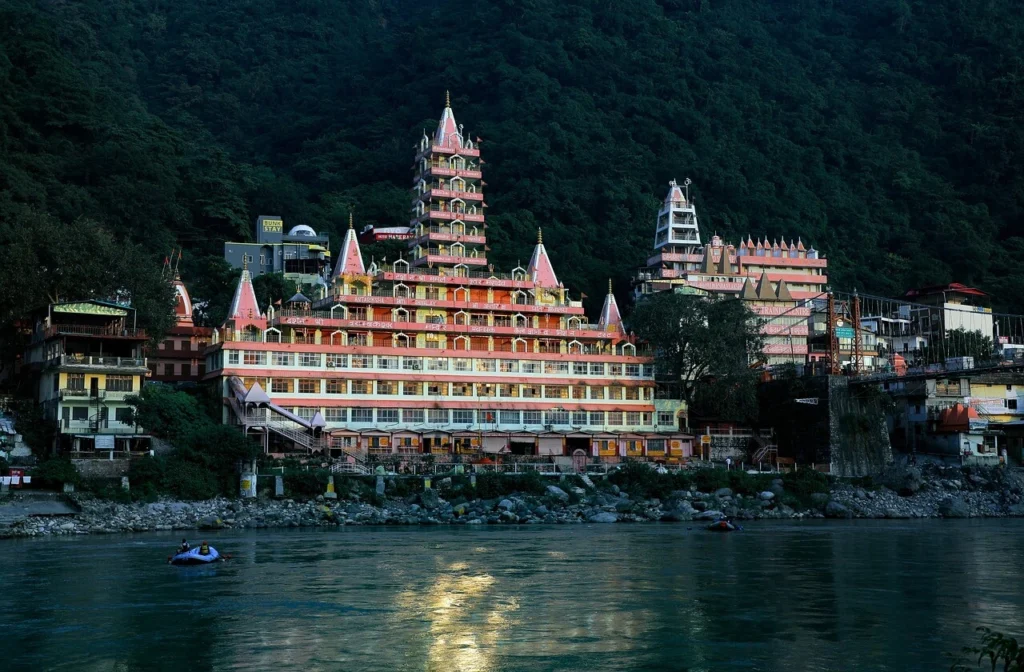
Rishikesh often announces itself quietly. The Ganges arrives here fresh from the Himalayas, still fast and clear, brushing past ghats where priests move with unhurried focus and travelers pause, unsure whether to watch the river or the rituals unfolding beside it. The town feels suspended between motion and stillness. Motorbikes hum along narrow roads, bells ring from temples, and above it all hangs a sense that time works a little differently here.
Set at the foothills of Uttarakhand, Rishikesh has long held a particular place in the Indian imagination. Ancient texts describe it as a space for meditation and retreat, a threshold between the plains and the mountains. For centuries, sages and seekers came to this stretch of the Ganges to practice yoga, pen philosophy, or step away from worldly concerns. That inheritance still shapes the town, though it now shares the stage with backpackers, rafting guides, café menus, and signboards in multiple scripts.
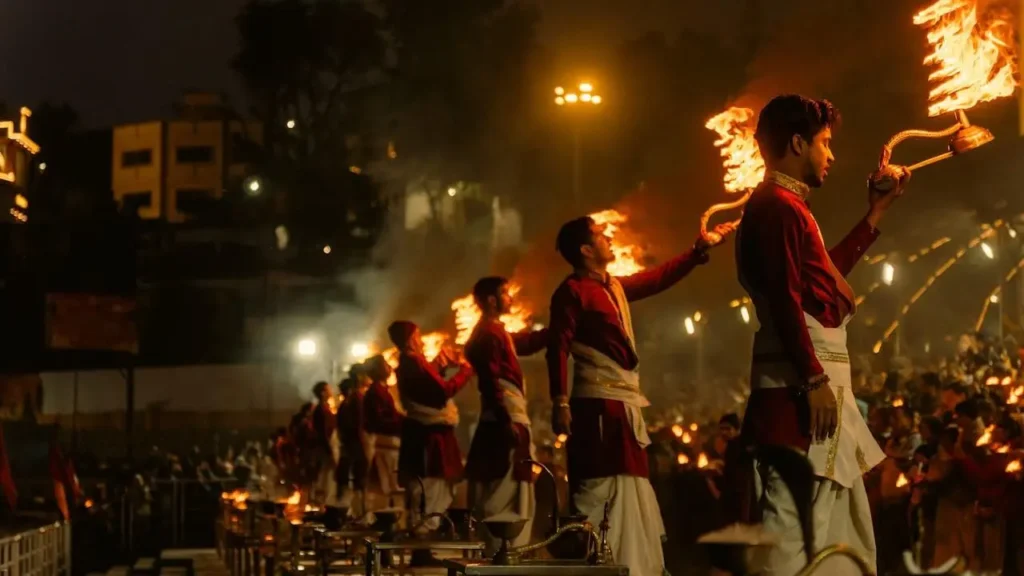
The past is not presented as a museum piece. It shows up in the everyday. Ashrams continue to follow schedules built around dawn prayers and evening aarti. Sanskrit chants drift out into streets where vendors sell chai and fruit by the kilo. Temple bells cut through the sound of traffic. Rishikesh does not isolate its spiritual history from daily life, it folds it in, sometimes awkwardly, sometimes seamlessly.
Travelers encounter this blend almost immediately. The town is officially vegetarian, a rule that feels less like a regulation and more like an extension of its values. Restaurants serve lentils, flatbreads, seasonal vegetables, and sweets soaked in syrup. The food is filling rather than elaborate, designed to nourish more than impress. At the same time, global influences slip in easily. Wood fired pizzas share space with thalis. Espresso machines hum a few steps away from Ayurvedic kitchens. The contrasts are visible but rarely treated as contradictions.
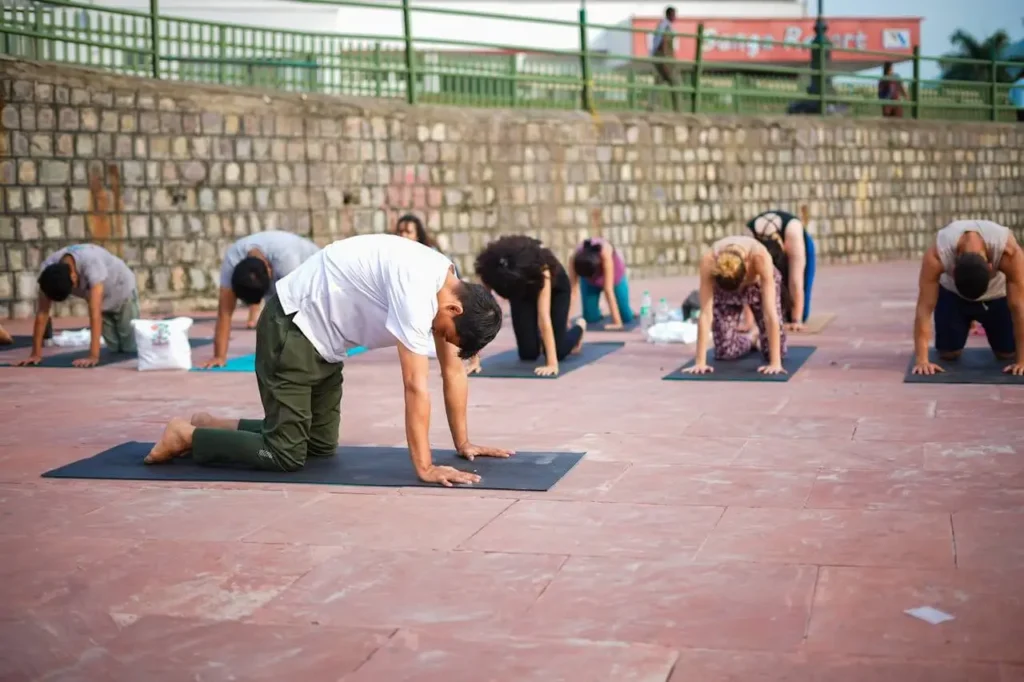
Rishikesh has gained international attention as a center for yoga, and the legacy of that reputation lingers. Yoga schools line the streets, advertising teacher training and drop in classes. Some are traditional, others distinctly modern. This has shaped the rhythm of the town. Days tend to start early. Mornings feel purposeful, with groups walking toward classes, mats tucked under arms, greetings exchanged quietly. By afternoon, the pace softens. Cafés fill with people reading, writing, or simply watching the street.
The Ganges remains the town’s anchor. It is not just scenery but a working presence. Laundry is washed along its edges. Pilgrims bathe in its current. Ceremonies take place at sunset, lamps floating downstream in clusters of light. For travelers, the river often becomes a reference point, a way to orient both geographically and emotionally. Bridges like Lakshman Jhula and Ram Jhula carry steady streams of pedestrians, scooters, cows, and monkeys, creating scenes that feel choreographed by habit rather than planning.
Rishikesh also carries a quieter sense of play. The town is one of India’s early hubs for river rafting, drawing those who come less for reflection and more for adrenaline. Jeeps loaded with helmets and paddles weave through the streets, their passengers still wet from the rapids. This coexistence of adventure tourism and spiritual retreat can feel surprising at first. Over time, it begins to seem inevitable. The landscape invites both stillness and movement.
Cultural charm here often appears in small moments. A shopkeeper pauses to finish a prayer before returning to a transaction. A cow settles in the middle of a narrow lane, traffic reorganizing itself patiently around the obstacle. Loudspeakers announce evening rituals while nearby cafés lower their music in quiet agreement. Rishikesh asks for attention rather than admiration, rewarding those who notice these modest negotiations between tradition and modern life.
The town’s international visibility increased dramatically in the late twentieth century, notably after the Beatles’ stay at Maharishi Mahesh Yogi’s ashram. That chapter is still referenced, sometimes earnestly, sometimes with a hint of irony. Yet it is only one layer in a much longer story. Rishikesh has absorbed global curiosity before and continues to do so, reshaping itself without fully letting go of its core rhythms.
Evenings bring a gentle sense of closure. Shops pull down shutters. The river reflects strings of lights from the ghats. Locals and visitors stand side by side during aarti, watching flames circle in practiced arcs. The moment is public, repetitive, and deeply familiar to the town. For newcomers, it can feel ceremonial without being theatrical.
Rishikesh does not try to resolve its many identities. It allows them to exist in parallel, sometimes overlapping, sometimes colliding softly. It is a place where ancient practices remain visible, not preserved behind glass but adjusted to fit contemporary life. Travelers often arrive with expectations shaped by yoga posters or spiritual lore. What they find instead is a town attentive to routine, shaped by belief, commerce, nature, and habit in equal measure.
The impression Rishikesh leaves is less about transformation and more about perspective. It suggests that history does not always recede into the background, and that the present does not need to overpower what came before. The river keeps moving, the town keeps adapting, and somewhere between the chants, conversations, and passing traffic, Rishikesh continues its long, unhurried dialogue with those who pass through.