
Set along the Arabian Sea, Kochi is often introduced as Kerala’s historic port city in India, though that description barely captures its character. This is a place shaped less by landmarks and more by atmosphere. Water moves through it constantly, in the form of backwaters, ferries, and working harbors, setting a pace that feels measured rather than slow. Travelers tend to sense this rhythm early on, a city that does not rush to explain itself, but allows its patterns to surface gradually.
That sense of gradual understanding matters in Kochi, because the city rarely presents itself as a single, unified experience. Visitors often leave with the feeling that they have seen several versions of the same place, each operating at a slightly different tempo. To make sense of this, it helps to look at how Kochi has grown and how its parts relate to one another.
A Port Shaped by Arrival
Kochi has always been accustomed to arrivals. Long before it became part of modern travel itineraries, it was a trading port that drew merchants from Arabia, China, and Europe. These encounters did not simply pass through. They settled, mixed, and left behind communities that still exist. Churches, mosques, and synagogues sit within close reach, not preserved as historical statements but functioning as part of everyday life. The city’s past remains present in small, unremarkable ways, in architecture softened by humidity, in family names, and in the way diversity feels ordinary.
As the city expanded, its functions spread across water. Mainland Kochi grew into the commercial and residential core, while older coastal pockets retained a slower, more outward-facing character. This shift explains why travelers often sense a change in tone as they move through the city.
Two Faces of the Same City
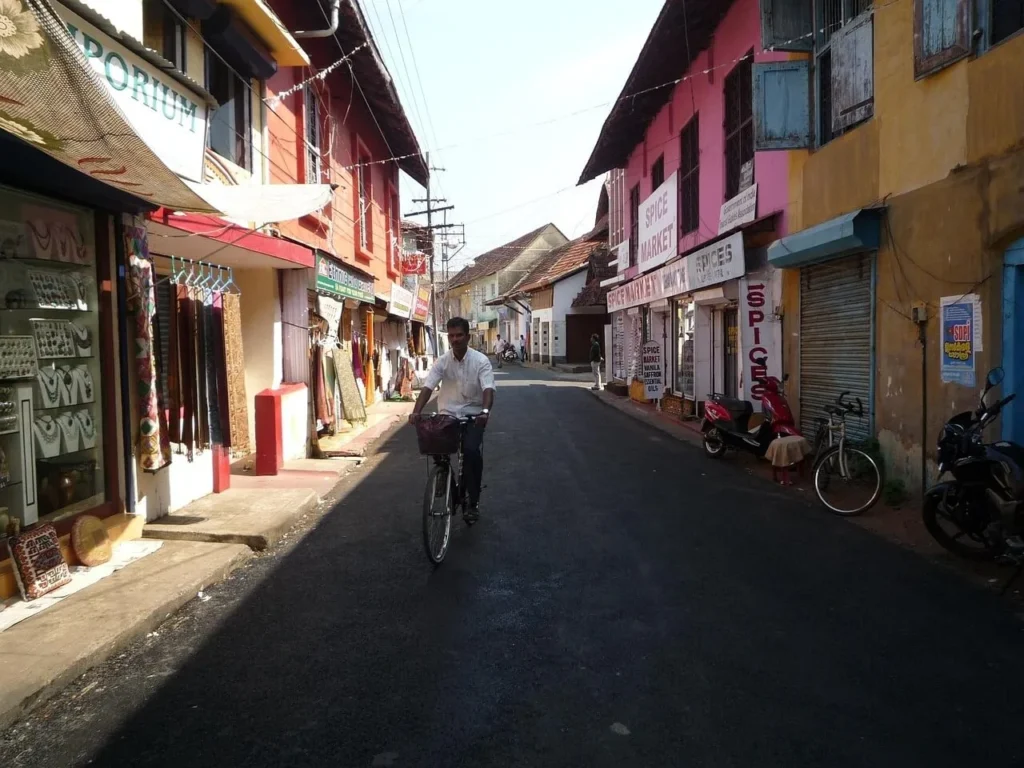
Mainland Kochi is busy and practical, shaped by offices, markets, and neighborhoods that operate on routine and urgency. Movement here is purposeful, and the city feels firmly anchored in the present. Fort Kochi, across the water, carries the weight of earlier centuries more visibly. Streets are narrower, colonial-era buildings line the roads, and walking replaces rushing. For many visitors, this is the area where Kochi feels most legible, not because it is simpler, but because it leaves room to pause.
The difference between Kochi and Fort Kochi is less about separation and more about rhythm. Fort Kochi feels accustomed to being observed, yet it has not been entirely reshaped by tourism. Cafes and galleries occupy former homes, but local life continues without adjusting itself for an audience. The ferry ride between the two parts of the city becomes a quiet transition, offering travelers a chance to sense how Kochi holds multiple identities at once.
Everyday Life, Unperformed
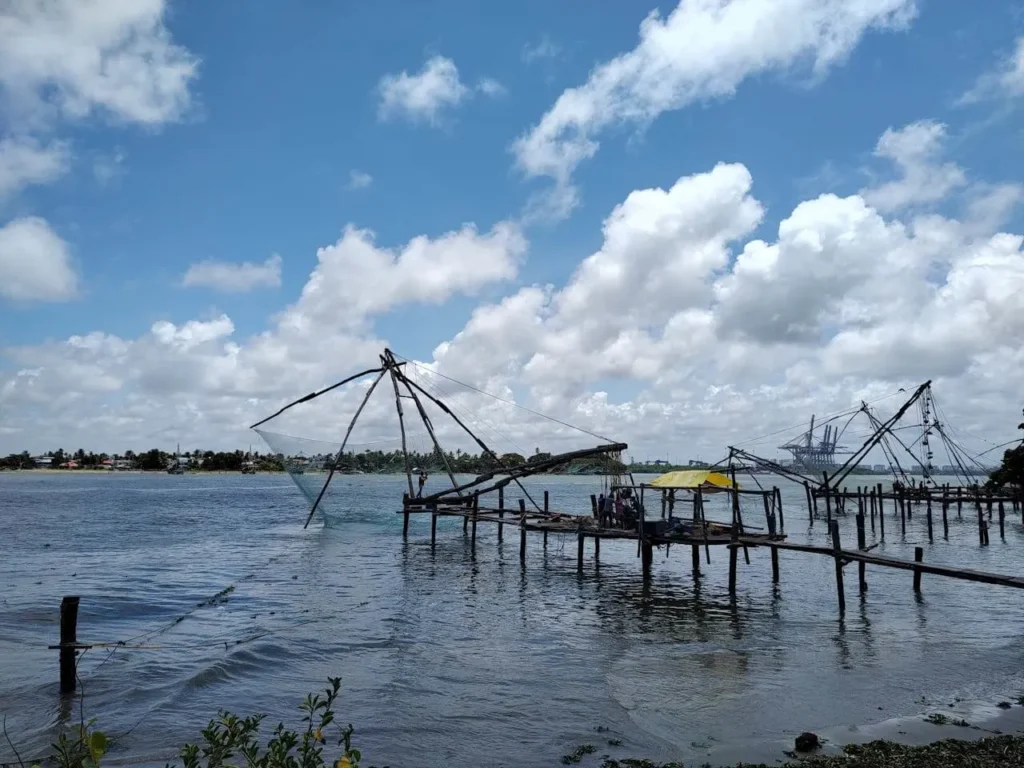
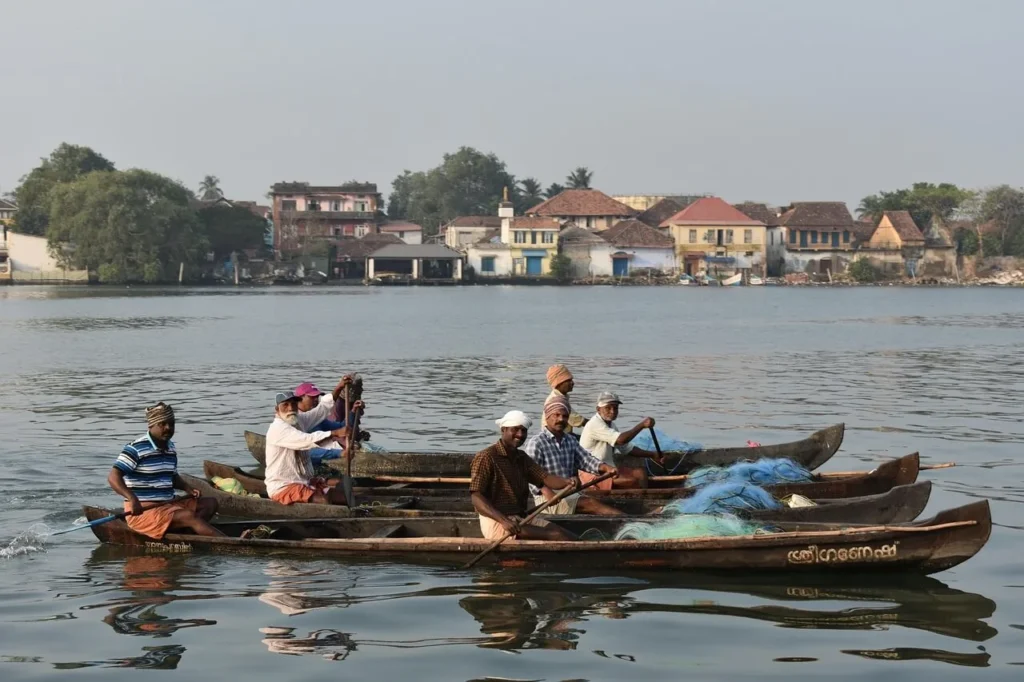
Daily life across the city reveals a similar balance between function and continuity. Ferries operate as essential transport rather than scenic diversions. Fishing remains a visible livelihood, particularly along the coast where Chinese fishing nets still rise and fall through careful coordination. These are not performances arranged for visitors, but routines refined over generations.
Cultural expression follows the same logic. Traditional art forms such as Kathakali continue with discipline and ritual, while contemporary art has found a natural place within Kochi, especially in Fort Kochi’s reused warehouses and homes. The old and the new do not compete for attention. They coexist quietly, much like the city itself.
Food offers another subtle record of Kochi’s layered history. Kerala cuisine forms the foundation, built around coconut, rice, seafood, and spice. Within that framework sit influences shaped by centuries of contact. Syrian Christian dishes, Muslim culinary traditions, Jewish recipes, and traces of Chinese technique appear without announcement, reflecting a city long practiced in absorbing difference.
A City Comfortable With Its Pace
What often stays with travelers is Kochi’s restraint. The city does not perform or persuade. Shops open without ceremony, conversations unfold at their own pace, and social life spills naturally into streets and courtyards. Tourism is present, particularly in Fort Kochi, but it does not dominate the city’s tone.
As evening settles, ferry lights flicker across the water, traffic thins, and Kochi continues steadily, comfortable in its own rhythm, with or without an audience.